
How I work
I review tools I actually use in production. For categories outside my daily stack, I lean on multiple independent sources — minimum three — before forming a view. Every article ends with the full source list so you can audit my reasoning.
What I won’t review
- Products from my current employer (Synology Taiwan)
- Head-to-heads naming my employer against direct competitors
This is a hard line, not a soft preference. Editorial independence is the whole point of the project.
Reach me
charles@topinsight.co — for tips, corrections, or pitch suggestions.
Articles
ZFS vs Ceph for a small homelab: when is Ceph worth it?
A tested ZFS vs Ceph decision guide for small homelabs, covering three-node HA, write RPO, capacity, networking, hardware, and operational cost.
How to measure AI coding subscription usage without guessing
A reproducible August 2026 method for measuring Cursor, Codex, and Claude Code usage with quota snapshots, token traces, accepted outcomes, and burn-rate checks.
Cursor Ultra vs Codex Pro 5x: where should a $100 budget go?
Cursor Ultra is $200, not a recurring $100 plan. This August 2026 comparison tests the pricing math against Codex Pro 5x and explains the real choice.

TrueNAS + Syncthing: sync large datasets without public cloud
A tested 2026 guide to TrueNAS host paths, Syncthing folder modes, versioning, ACLs, multi-terabyte seeding, and the backup limits you must understand.
Cursor vs Codex vs Claude Code for $20: which plan gives the most usable coding time?
A July 2026 comparison of the three $20 plans, their incompatible usage meters, current limits, and a reproducible normalization test.

StackOverflow's May 2026 answer count fell below its first month from 2008: the decline is confirmed
A 404-upvote r/programming post documented that StackOverflow had fewer new answers in May 2026 than in its launch month, June 2008. The agent-coding era killed the Q&A site.

Cloudflare acquires VoidZero: the Vite / Vitest / Rolldown takeover that signals the agent-cloud move
Cloudflare bought Evan You's VoidZero company on June 4. The bundler-and-runtime stack is now part of the cloud aiming to host whatever agents build next. The strategic implication is large.

Hermes Agent: the open-source coding agent that just topped OpenClaw on OpenRouter token usage
Nous Research's Hermes Agent crossed OpenClaw in OpenRouter usage in May. The 0.16 Surface release adds a real desktop app, remote-gateway support, and an admin dashboard.

Anthropic's large-codebase masterclass: the AI-layer thesis that reframed Claude Code's moat
Anthropic published a working guide for using Claude Code at multi-million-line scale. The harness-matters-more-than-the-model framing is the strategic point most engineers missed.

Plex lifetime jumps to $250 and the Jellyfin migration just got a real analytics tool: JellyStat lands
Plex tripled the lifetime price in May 2026 and accelerated a Jellyfin migration that was already underway. JellyStat (the Tautulli-equivalent for Jellyfin) makes the move credible for serious users.

DeepSWE and the death of SWE-bench Pro: the benchmark replacement that landed in late May
datacurve.ai shipped a SWE-bench-Pro replacement that is contamination-free and verifies cleanly. The leaderboard it produces looks dramatically different from what the labs were marketing.

DeepSeek V4: the 1M-context + 75%-cheaper launch that made everyone else look slow
V4 ships native 1M context, two new attention mechanisms, and pricing 10-100x cheaper than the closed frontier. The technical report is a primer on what compounded efficiency actually looks like.

Claude Opus 4.8 launch: the dynamic-workflows update is the real story, the model is the bonus
Opus 4.8 dropped May 28 with SWE-bench Pro at 69.2% and honesty improvements. The Claude Code dynamic-workflows feature that shipped alongside is the change that actually moves daily use.

Cursor Composer 2.5: the price-per-task model that may have just reset the workhorse tier
Composer 2.5 lands at ~$0.50 per Cursor-bench task against Opus 4.7 at ~$11. The model is not the smartest. It is the right shape for the regime most teams actually operate in.

Google I/O 2026 and the Antigravity 3.0 follow-up: the agentic Gemini era is the actual product
I/O 2026 shipped Gemini Omni, Flash 3.5, the TPU split, and a redesigned Antigravity IDE focused on agent management. The pivot from chatbot to agent runtime is now Google's primary thesis.

Pi: the minimal coding agent that runs in your terminal and does not try to be Claude Code
Pi is a 100% open-source CLI agent without MCP, sub-agents, or permission pop-ups. It just runs commands. After a week of testing, it is the right tool for homelab + infra-as-code work.
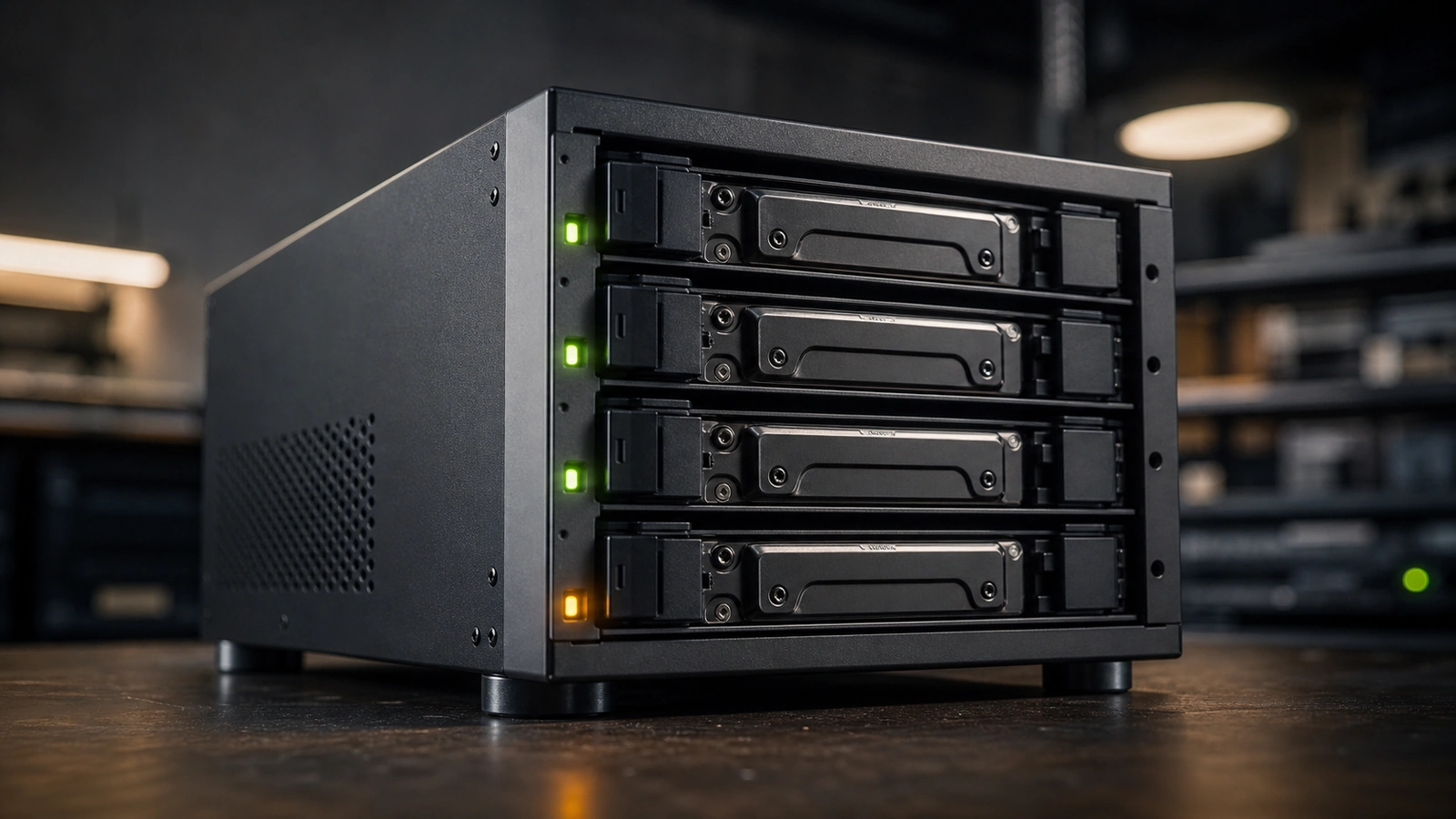
4-bay ZFS pool design: mirrors vs RAIDZ2 in 2026
A tested 2026 decision guide for 4-bay ZFS pools: mirror vs RAIDZ2 failure tolerance, RAIDZ expansion, current HDD pricing, safe create commands, and dataset settings.

Claude Code vs Cursor in 2026: pick by workflow, not model
A July 2026 comparison of Claude Code and Cursor across workflow, current plans, usage limits, automation, failure modes, and a reproducible cost test.
Claude Code review: the agentic CLI that actually finishes the task
After six months of using Claude Code as my primary AI coding interface, here is what it does better than Cursor, where it still trips, and which jobs it should own on a senior engineer’s machine.

Cursor review 2026: who should pay for Pro?
Cursor is now an agent workspace with CLI, cloud agents and Composer 2.5. Our July 2026 review tests the plan math and explains who should choose Pro, Pro+ or Ultra.

Cloudflare Workers vs Vercel Edge Functions: which edge runtime wins in 2026
Edge compute compared head-to-head: cold start, runtime, pricing, ecosystem, and the workloads each platform was built for — with clear picks per use case.

DGX Spark + Ryzen 395 — homelab AI hardware reached its inflection in April
A user posted a 16x DGX Spark cluster with 2TB unified memory. AMD shipped a 128GB Ryzen 395 mini-PC. Homelab AI hardware moved from "expensive" to "credible" this month.

GitHub stability crisis and Ghostty leaves — the platform-risk conversation gets sharper
GitHub had major reliability issues on April 28-30. Ghostty announced it's leaving GitHub the same week. The platform-risk argument that was theoretical is now operational.

MinIO archived — the open-source storage shakeout and what to use instead
MinIO archived its main repo on April 25. The selfhosted community has moved on to Garage, SeaweedFS, and RustFS. The license-vs-commercial pattern keeps repeating.

Bitwarden CLI compromise — the supply chain attack pattern hits password tooling
The Bitwarden CLI was compromised on April 23 via the Checkmarx supply-chain incident. The CLI repo had been archived in 2022, which is the actual story here.

M5 Max + Gemma 4 — IndyDevDan's "local stack kills providers" thesis and the dissent
IndyDevDan ran his April stack on an M5 Max with Gemma 4 via MLX and claims it kills hosted providers. The thesis is partly right and partly very wrong.

The Claude quality decline narrative — and Anthropic's admission that they cut reasoning effort
For a month users said Claude got dumber. Anthropic admitted on April 7 they cut the default reasoning effort. The pattern matters more than the single incident.

Opus 4.7 launches with mixed reception — the MRCR regression and the 4.6-rollback theory
Anthropic shipped Opus 4.7 on April 14. The community read: it's 4.6 with a fix, MRCR retrieval regressed, and the thinking-effort toggle vanished. The discourse is sharp.

Cursor ditches VS Code — the editor wars get serious in April
Cursor announced it's moving off VS Code's base in April. The bet is real, the timing is provocative, and Claude's competing editor dropped in the same month.

The Axios RAT — npm supply chain attacks hit a new level of sophistication
Two Axios versions on npm dropped a precision RAT via a compromised maintainer account after individually targeted social engineering. Supply chain attacks are getting good.

NGINX is dead? Angie migration — what the F5 split actually means for your reverse proxy
Christian Lempa's March 27 video walks the NGINX-to-Angie migration. The framing question matters more than the technical one — and the answer is uncomfortable.

DeepSeek's Engram architecture — the March 2026 persistent-memory breakthrough
bycloud broke down Engram on Mar 24 — DeepSeek's third major architectural contribution in six months. The DualPath paper landed Feb 26; r/LocalLLaMA validated it within weeks.

Pi CEO Agents + Claude 1M context — IndyDevDan's March 2026 multi-agent framework
IndyDevDan formalized the CEO-agent pattern in March 2026 — one coordinator, multiple workers, Claude's 1M context as substrate. Names what r/ClaudeAI early adopters had been building ad-hoc.

Recursive Language Models — the "death of RAG" framing and what it actually means
A new paper proposes Recursive Language Models where an LLM calls itself to traverse context. The "RAG is dead" headline overshoots; the underlying pattern is genuinely interesting.

Vibe coding is dead — what Stripe's AI agents taught IndyDevDan and what it means
IndyDevDan studied Stripe's production AI agents and declared vibe coding dead in March. r/ChatGPTCoding's "vibe coding is now just coding" thread arrived 5 weeks earlier with the same point.

Cloudflare ships Vinext — a Vite-based Next.js reimplementation and a shot at Vercel
Cloudflare shipped Vinext, a Next.js API reimplementation on Vite that runs anywhere. This is less about Vite vs webpack and more about who owns the Next.js runtime layer.

Cloud coding agents: Warp ships Oz, the always-available agent platform
bycloud covered Warp's "Oz" cloud-hosted coding agents on Feb 27. The pattern fills a gap between local Claude Code and remote sandboxes — but Warp's pricing-and-trust baggage shadows it.

Dokploy vs Coolify in February 2026 — and why Docker Swarm came back
Christian Lempa's February 27 head-to-head flagged Dokploy's Swarm support as the real differentiator. Two weeks running both on Hetzner — Coolify still wins single-node, Dokploy unlocks multi-node.

Minisforum MS-R1 review: the world's first ARM mini workstation, three months in
Minisforum MS-R1 shipped Nov 2025 as the first ARM mini workstation with real PCIe Gen4 x8 + dual 10GbE. Three months of reviewer testing — what the $504-$695 box delivers, and what it doesn't.

TanStack Start in 100 seconds — and the post-Next.js full-stack JS landscape
Fireship covered TanStack Start; T3 Chat + Mastra Cloud already migrated off Next.js; r/reactjs is questioning SSR-by-default. The post-Next.js story crystallized in Q1 2026.

How AI is breaking the SaaS business model — the February 2026 reckoning
Fireship shipped "AI is breaking SaaS" on Feb 17. The r/SaaS "5 boring apps, $200k/mo" thread + r/startups "worst period to build" landed in the same window. Working engineer's read.

DeepSeek "adds parameters where there were none" — the February 2026 conditional-activation move
bycloud's Feb 17 video unpacked DeepSeek's next architectural innovation: virtual parameters via conditional activation. With V4 looming and GLM-5 already shipped, the open-frontier race compresses.

Opus 4.6 + Sonnet 4.6: Anthropic's February pair, and what "Fennec" actually shipped as
Opus 4.6 (Feb 5) + Sonnet 4.6 (Feb 17) — Anthropic's February pair. Leaked "Fennec" codename shipped as Sonnet 4.6; Opus 4.6 caught a post-launch safety-tuning controversy. Two weeks of routing.

Claude Code + Playwright — IndyDevDan's 4-layer pattern and what made browser automation reliable
IndyDevDan released a 4-layer Claude Code Playwright skill on Feb 16 2026. Combined with three months of Anthropic browser tooling, agentic browser automation finally crossed into production.

The LLM billion-dollar problem — bycloud frames the AI economics tension
bycloud's Feb 10 video maps the structural cost problem facing frontier LLM dev. r/MachineLearning's "elephant in the room" thread + the AI Futures forecast capture how the field is responding.

Coolify: when you want Heroku/Vercel ergonomics without the Heroku/Vercel bill
Christian Lempa shipped a January 28 Coolify tutorial. The product has matured into the right self-hosted PaaS for 2026. Honest write-up after migrating side projects off Vercel.

Meituan LongCat and the Chinese open-source AI trifecta: the January 2026 lab landscape
bycloud shipped two January 2026 videos surveying the Chinese open-source AI labs. Meituan's LongCat is the surprise; the broader pattern is the more important story.

OPNsense + Prometheus + Grafana: the homelab firewall monitoring stack in 2026
Christian Lempa shipped a January 20 OPNsense monitoring tutorial. The stack (OPNsense + node_exporter + Grafana Alloy) replaces hand-rolled scripts and finally feels finished.

The RL irony in LLMs: why LoRA fine-tuning is the practical 2026 RL story
bycloud published a January 21 video on the "RL irony" — RL is noisy and hurts generalization, yet it remains essential. LoRA-based RL emerges as the practical compromise.

Pangolin: the self-hosted Cloudflare-Tunnel replacement that finally landed in 2026
Pangolin started as a hobbyist project in 2024. By January 2026 it is a credible zero-trust VPN replacement for Cloudflare Tunnel. Honest write-up after migrating my homelab.

Thread-based engineering: how Boris Cherny ships and the IndyDevDan extension
IndyDevDan published a January 2026 video on "thread-based engineering" inspired by Claude Code creator Boris Cherny. The framework is the most useful agentic-coding mental model of 2026.

When Claude Code deletes production: agent safety guardrails in January 2026
IndyDevDan opened 2026 with the framing every engineer running agents needs to internalize: your agents are one hallucination away from destroying everything. What to do about it.

Claude Agent Skills: how the December 2025 abstraction is rewiring agentic coding
IndyDevDan published three videos on Claude Agent Skills through December. The abstraction is more important than the marketing suggests. Working engineer write-up after 30 days.
NetBox for the homelab: when your IP spreadsheet finally needs a real tool
Christian Lempa shipped a NetBox tutorial in mid-December. The homelab community keeps rediscovering that spreadsheets stop scaling at 30+ services. Honest write-up after migrating.

React2Shell (CVE-2025-55182): the React 10.0 critical vulnerability and what it says about JS supply chain
A 10.0 critical vulnerability in React landed in early December. The patch is straightforward; the supply chain pattern it reveals is the more interesting story.

OpenAI in "CODE RED" after Gemini 3: the December competitive reset
Theo posted a December 4 video framing OpenAI's post-Gemini-3 posture as "CODE RED." Sam Altman's public statements that week confirm something shifted. What the reset actually means.

DeepSeek V3.2 and Sparse Attention: how a small lab keeps undercutting frontier model pricing
DeepSeek V3.2 shipped early December with a new sparse-attention mechanism (DSA) that explains the absurd pricing. The technical story and why it matters for engineers.

Anthropic donates MCP to the Linux Foundation: what the December 8 announcement actually changes
Anthropic moved MCP under the Agentic AI Foundation in early December. The 4393-upvote Reddit thread captured the community reaction. The strategic shape is more interesting than "open standard wins."

Claude Opus 4.5 launch: Anthropic punches back at Gemini 3 with a model for engineers
Opus 4.5 dropped November 24 priced at $5/$25 per million tokens. IndyDevDan called it "the model for engineers." Honest measurement against Gemini 3 Pro after two weeks of daily use.

Anthropic acquires Bun: what the deal actually means for JavaScript developers
Anthropic bought Bun in early December and tied the announcement to Claude Code crossing $1B revenue. The strategic shape is more interesting than the surface story suggests.

UGREEN NAS DH4300 Plus review: the ARM NAS bet that almost makes sense
UGREEN keeps shipping NAS hardware with sharp pricing and an ARM chip nobody asked for. The DH4300 Plus is the cleanest expression of that strategy yet. Honest verdict after two weeks.

N8N + AI agents for homelab automation: the patterns that actually work in November 2025
N8N + local LLM + a few well-placed integrations replaced the cron-and-shell-script layer of my homelab. Honest write-up of what works, what does not, and what the YouTube tutorials skip.

Gemini 3 Pro launch: dominates benchmarks, but the model is not the moat anymore
Google shipped Gemini 3 Pro in November with benchmark numbers that should have been a knockout. The shipped reality: the model wins, but the agentic stack still belongs to Anthropic.

Cursor 2.0 vs Google Antigravity: the late-2025 IDE arms race that nobody planned for
Cursor shipped 2.0 on October 30. Google shipped Antigravity on November 18. Two completely different bets about what an "AI IDE" should become. The honest read on which lands.

Agent sandboxes are the new parallel-coding primitive — E2B, Modal, Daytona, and why November 2025 matters
Running multiple AI agents in parallel started as a hack with git worktrees. November 2025 was when ready-made agent sandbox products became the obvious primitive instead.

Claude Haiku 4.5 and the cheap-tier coding arms race: November 2025
Anthropic shipped Haiku 4.5 in mid-October matching Sonnet 4 at one-third the cost. By mid-November the cheap-tier race had three players. The honest measurement.

Why engineers are ditching MCP servers — and the three things they use instead
IndyDevDan published a viral mid-November video on MCP-server context bleeding. Christian Lempa published an MCP tutorial the same week. Both are right, and the reconciliation matters.

The AWS US-EAST-1 October 2025 outage: 15 hours that re-opened the single-cloud debate
A DNS fault in DynamoDB took out 2500+ services for 15 hours on October 20. The technical story is small; the strategic story is whether anyone actually moves off single-cloud now.

Parallel AI coding agents: the workflow pattern emerging in October 2025
Engineers are starting to run multiple AI coding agents in parallel on separate tasks. The pattern is real, the tooling is rough, and the human-in-the-loop question is unsettled.

Claude Sonnet 4.5 a month in: was "best coding model in the world" true?
Anthropic launched Sonnet 4.5 on September 29 with the bold claim of being the best coding model in the world. After a month of daily use, here is the honest measurement against that claim.

The cheap VPS landscape in October 2025: Hetzner, OVH, DigitalOcean, Scaleway
AWS Fargate sticker shock pushed developers back to cheap VPS providers in 2025. Here is the working ranking after running the same workload on Hetzner, OVH, DigitalOcean and Scaleway.

Local LLM platforms for coding in late 2025: Ollama vs LM Studio vs the alternatives
Local LLMs crossed the "actually useful for coding" threshold this summer. Which serving platform you choose matters more than ever. The honest comparison after running all four.

Cursor alternatives revisited: what actually stuck four months after the pricing crisis
In June we tracked which Cursor alternatives users tried. Four months on, the question is which ones they stayed on. The answer is messier than a single replacement winner.

Codex CLI + GPT-5 vs Claude Code + Sonnet 4.5: the agent-loop showdown
Both shipped major upgrades within four weeks of each other. After running them daily for a month, here is the honest head-to-head — where each wins, where each fails.

Tailscale vs Cloudflare Tunnel for homelab access: the comparison everyone gets wrong
The Reddit fight nobody asks the right question about. Tailscale and Cloudflare Tunnel solve different problems — and choosing between them is mostly choosing which problem you actually have.

GPT-5 two months in: from launch-day backlash to coding-by-default
GPT-5 shipped on August 7 to a wall of skepticism — "all this hype just to match Opus" went to 979 upvotes the same day. Two months later the narrative has flipped. Here is what actually happened.
WD vs Seagate vs Toshiba HDD warranty in 2025 — what you're actually buying
Three vendors, three warranty stories. r/homelab's "Seagate Exos dents" (727 ups) + "How to check HDD genuine" (608 ups) + r/DataHoarder's WD vs Seagate threads frame the real buying decision.
Building a personal Claude Code workflow — the daily-driver setup
IndyDevDan's Sep 15 "Agentic Prompt Engineering" + Elite Context + Output Styles videos + r/ClaudeAI's "6 months of hardcore use" (2313 ups) frame the daily-driver setup. Exact config.

pgvector vs Cloudflare Vectorize — where each one actually fits
Both do vector search; both optimize for different shapes. Theo's Postgres consolidation + r/Rag practitioner thread + Lempa's Cloudflare Workers content frame the decision matrix.

Anthropic vs OpenAI API pricing: the actual math at typical coding workloads
Both API providers iterated pricing through 2025 and Claude Code added weekly limits. The honest "which is cheaper" answer depends entirely on workload shape. Here is the working math.

Bun in production — where the runtime actually fits in 2025
Bun matured fast in 2024-2025. r/node "migrated monorepo, here's honest feedback" (163 ups) + r/javascript "Node vs Deno vs Bun 2025" (30 ups) frame the production-viability story.

MCP protocol adoption — six months in, what actually shipped
Anthropic's MCP launched Nov 2024. r/mcp "3 weeks building dream setup, mostly useless" (693 ups) + "5 most useful MCP servers" (469 ups) + IDD's curriculum frame the six-month state.

NAS drive buying guide 2025 — when 18TB used enterprise is the right call
HDD prices doubled through 2025. r/homelab "Hard drive prices have doubled" (1121 ups) + "vendor unacceptable shipping" (2272 ups) + Lawrence Systems framing shape the buying calculus.
Codex CLI review (2026): strong terminal agent, variable usage
Codex CLI review with current GPT-5.6 credit rates, plan limits, usage controls, Fast mode, and a reproducible six-defect audit on version 0.146.0.

Cloudflare Workers vs AWS Lambda cost in 2025 — the actual math at scale
AWS Lambda has the ecosystem; Cloudflare Workers has the price. r/aws "AWS GenAI complexity" (160 ups) + r/nextjs "Vercel CPU 3x slower" + Lempa's Cloudflare content shape the math.
Claude Code + Vim, Helix, JetBrains — the editor-agnostic AI workflow
Claude Code runs in a terminal — so it works with any editor. IndyDevDan's Hooks + Plan Mode workflow + the r/neovim community's Aug 2025 patterns combined into a working setup.

Cloudflare D1 read replicas — what the August 2025 launch unlocks and where it still falls short
D1 read replicas shipped August 2025 — the missing piece for read-heavy global apps on Cloudflare Workers. The architecture is interesting, the unlocks are real, the production caveats matter.

Qwen3-Coder vs DeepSeek V3-Coder — the Chinese OSS frontier coding shootout
Qwen3-Coder dropped Jul 22; DeepSeek V3 held the prior crown. r/LocalLLaMA launch threads (1928 + 1693 upvotes) frame the shootout. After running both extensively, the honest head-to-head.
Building a 3-node Proxmox HA cluster — the homelab high-availability path
A 3-node Proxmox cluster with HA is achievable under $1,500 in 2025. Craft Computing's CEPH tutorial + Lempa's LXC framing + r/homelab dashboard threads = the working build.
Zed AI mode review — the Rust-based editor takes a real swing at AI
Zed shipped AI through 2024-2025 with a different philosophy than Cursor, raised $32M Series B in August, then shifted to token-based pricing in September. Working review.

Cloudflare Workers + D1 in production — the real-world build pattern
D1 hit production-ready in 2024 and matured fast. r/nextjs "Vercel CPU 3x slower" benchmark + Lempa's Cloudflare Workers content + r/CloudFlare 4-year SaaS tips frame the working stack.

GPT-5 leak rumours — what r/OpenAI's August chatter implied for coding workflows
r/OpenAI hit four separate GPT-5 leak threads in one week. Theo and Fireship framed the OpenAI-momentum context. Working read from early August before the actual launch landed.
.cursorrules patterns from real engineers — what actually moves the needle
r/cursor's "gold standard files" thread (235 ups) + "Claude Code prompt to auto-generate" (181 ups) + IndyDevDan's Claude Code curriculum frame what actually works for project rules.

Arc browser is winding down — what to switch to, what we lose, and what r/ArcBrowser is doing
The Browser Company shifted focus to Dia in mid-2025. r/ArcBrowser threads documented the migration in real time — Arcopy, Gem, Zen, Safari catching up. Working read after a year on Arc.
Raycast Pro AI features review: is the $8/month upgrade still worth it after BYOK?
After six months on Raycast Pro and watching the BYOK rollout, the AI subscription math has changed. Here is whether the upgrade still justifies itself for a working engineer in mid-2025.
Continue.dev vs Cursor: does the OSS extension actually replace the fork in 2025?
Continue.dev is the OSS attempt at building Cursor as a VS Code extension. After three months side-by-side, here is what the trade looks like once Cursor pricing went sideways.

Grok 4 for coding: separating the claims from the reality
Elon Musk claimed Grok 4 beats Cursor. Theo, Fireship and Matthew Berman piled in within 24 hours; r/singularity called it disappointing within four days. Working read after testing.
Aider vs Claude Code — the CLI-AI-coding head-to-head for power users
Both are CLI AI coding tools. Both have committed daily users. IndyDevDan's July Claude Code thesis + r/aider's "why is no one here?" thread frame the real divide. Honest head-to-head.
Cursor alternatives after the June 2025 pricing change: where users actually went
Cursor's pricing change pushed a meaningful slice of heavy users to look elsewhere. We tracked the Reddit migration data and tested every credible alternative. Here is the working ranking.

Cursor's pricing apology — what changed, what didn't, and the community read
Two weeks after the June pricing crisis, Cursor apologised. The r/cursor community got refunds back. The migration to Claude Code didn't reverse. Trust recovery stays slow.

OpenZFS 2.3 review — RAIDZ expansion lands, plus the quieter features worth caring about
OpenZFS 2.3 shipped the RAIDZ expansion feature homelabbers waited a decade for. r/zfs threads from June-August 2025 cover the operational reality. Working review from running 2.3 on a homelab pool.

Neon vs Supabase vs PlanetScale in 2025 — the managed-Postgres-and-friends decision
Three platforms eating Heroku Postgres's lunch. Theo's "switched to Postgres" + r/Supabase "client wants to sue me" + r/PostgreSQL pain points frame the actual 2025 decision.

Vercel Functions runtime shifts — what June 2025 broke, what it fixed, and the bill-shock cycle
Theo's "Vercel Finally Caught Up" (Jun 27) framed the Fluid Compute era. r/nextjs bill-shock threads showed the cost. Working read from migrating three apps through the transition.
Render.com in 2025 — the boring deploy host that just works
Render quietly grew into the "no surprises" deploy host while Vercel pivoted runtimes and Heroku had outages. The r/rails migration threads + open-source clones tell the broader story.

Building your own MCP server for Claude Code: a working tutorial
After running ten community MCP servers for months, the next step is writing your own. Here is the start-to-finish tutorial, including the parts the docs gloss over.

Linear Cycles for solo engineers: how to use them without the team you don't have
Linear Cycles are designed for teams. Solo and tiny-team engineers get more out of them than the docs suggest — if you adapt the workflow.

Unraid vs TrueNAS Scale in mid-2025 — where they converge, where they diverge
Both platforms shipped meaningful changes in early 2025. Lawrence Systems' TrueNAS Per-App IPs walkthrough + r/unRAID's ZFS AnyRAID announcement frame the convergence. Working comparison.

DeepSeek V3 for coding: the cheap-and-good model that changed the cost equation
DeepSeek V3 lands frontier-adjacent coding quality at roughly one-tenth the API price of Claude or GPT-4o. After six weeks of daily use, here is where it actually fits.

The Cursor pricing crisis of June 2025: what happened, what users did, what it means
Cursor changed its pricing in mid-June and broke trust with heavy users. The timeline, the Reddit reaction, and what the rest of 2025 looks like for the AI IDE market.
Aider best practices — the first-week workflow that makes it actually work
Aider rewards specific working patterns. r/ClaudeAI "6 months pair programming" (1459 ups) + r/aider thread + IndyDevDan's Plan Mode video frame the workflow. Three months of daily use.
Cline vs Roo vs Kilo Code: the open-source coding-agent fork tree, untangled
Three forks, three philosophies, one underlying engine. After running all three across real projects, here is what each fork actually optimises for and which one belongs in your stack.
Building a quiet homelab server in 2025: the parts list and the silence trade-offs
Quiet homelab is now achievable without spending FAANG-money. The hardware is here, the trade-offs are tractable. Here is the working parts list and the noise-vs-capability math.

Neon Postgres branching — using your database like a git branch
Neon turned Postgres branching into a workflow. r/PostgreSQL "Comparing branching costs Supabase vs Neon vs Xata" + Theo's Postgres consolidation frame the working pattern. Six months on Neon.

Claude vs GPT vs Gemini for coding in 2025: the API-tier shootout
Three frontier model families compete for your coding token spend. After six months running them across real workloads, here is which API actually deserves which job.

Proxmox VE in 2025: the default homelab hypervisor, reviewed honestly
Proxmox VE 8.4 ships in April 2025 and remains the homelab hypervisor everyone defaults to. After running it for years across multiple builds, here is what it gets right and the rough edges.

Fly.io vs Railway in 2025: which small-team backend host wins your money
Two hosts that have eaten meaningful share from the old guard. Fly.io and Railway sit in the same conceptual slot but trade differently. Here is the working choice.
Windsurf (Codeium) review: the IDE pivot that ate the parent product
Codeium rebranded its AI IDE to Windsurf in late 2024 and bet the company on it. Six months later the bet looks mostly correct — with some real rough edges.

MCP servers for Claude Code: the essential first ten to wire up
MCP is the protocol that turns Claude Code from a sharp CLI into a connected agent. After three months of wiring servers in, here are the ten that earn permanent space in my setup.

Claude 3.7 Sonnet on real coding tasks — benchmarks vs daily-use reality
Anthropic's Claude 3.7 posted strong SWE-bench numbers in Feb. AI Jason's "reduced 90% errors" workflow + IndyDevDan's starter pack + r/ClaudeAI 85% problem thread frame the daily-use picture.
TrueNAS Scale vs Core in 2025 — which to pick (and whether the question still matters)
iX has signalled Scale is the future. r/truenas 25.04 release thread + Lawrence Systems' Per-App IPs walkthrough + the Synology-exit migration patterns frame the working decision.

Turso review — edge SQLite has matured into a real production option
Turso bet on libSQL + edge replication. AI Jason's "reduced 90% errors" workflow + Theo's "switched to Postgres" framing + r/CloudFlare D1 context shape the 2025 verdict.
Cursor vs GitHub Copilot in 2025: which AI IDE actually deserves your $20 a month
Cursor outpaced Copilot in 2024 and held the lead through Q1 2025. Microsoft is catching up fast. Here is the practical head-to-head — autocomplete, agent mode, ecosystem, cost.

Cloudflare Workers Static Assets is here. What it means for Pages, and for you.
Cloudflare just made Workers the unified deployment target for both static sites and dynamic code. Pages is not dead — but the writing is on the wall. Here is the practical read.
Aider review 2025: the no-frills AI pair-programmer that quietly outlasts the hype
Aider is the OSS CLI AI coding tool that does one thing well: edit your repo from a chat prompt. After three months of daily use, here is what it gets right and where it shows its age.

Claude Code's first month — slash commands, MCP, and the agent loop that took over
By March 31 2025, Claude Code had shipped slash-command templates, gained Model Context Protocol traction, and become the daily driver IndyDevDan was building his whole workflow around.

Docker Hub pull rate limits — what the April 1 2025 change actually meant for homelabs and CI
Docker announced stricter Hub pull limits effective April 1, 2025. Christian Lempa walked through what breaks, what to migrate to, and how to authenticate. The cleanup was overdue.

The "vibe coding" mind virus — Fireship and the March 2025 debate
On March 26 2025 Fireship named the phenomenon: "vibe coding" — people building real software by chatting with AI, no formal training. The community split into two camps.

Gemini 2.5 Pro — Google's "Thinking Family" reboot and the "best AI for coding" claim
Google shipped Gemini 2.5 Pro on March 25 2025 with native reasoning. The community read landed within a day: "Damn Google really cooked this time." Then the caveats showed up.

The homelab AI server era — Christian Lempa's rig and the early-2025 self-hosted AI rush
Christian Lempa upgraded his Proxmox stack for AI workloads. NetworkChuck wired up Open WebUI + LiteLLM. By March 2025, the "AI in the homelab" pattern had concrete recipes.

TypeScript 7 — Microsoft rewrites the compiler in Go, claims 10x speedup
On March 11 2025 Microsoft announced TypeScript 7: the compiler is being rewritten in Go for ~10x faster builds. The community reaction: surprise, then "why Go specifically?"

Manus AI — viral Chinese agent that turned out to be Claude Sonnet + 29 tools
In early March 2025 Manus AI went viral as the "next DeepSeek." Within days the local-LLM community reverse-engineered it: Claude Sonnet + a tool harness. The hype was the product.

Qwen QwQ-32B — the best local reasoning model joins the open frontier (March 2025)
Qwen released QwQ-32B in early March 2025 — a 32B reasoning model that competes with DeepSeek R1 at a fraction of the parameters. Local LLM coders had a new daily driver.

GPT-4.5 FLOP, Claude 3.7 Sonnet starter pack — the early March 2025 vibe shift
GPT-4.5 landed flat. Claude 3.7 Sonnet + Claude Code arrived with momentum. IndyDevDan called the shift in week one and the discourse confirmed it within a fortnight.